
One of the most exciting things about pregnancy is tracking your development - and your baby’s - each month. Many new changes occur each month to both mom and baby as you get closer and closer to your due date. At the same time, you are likely to experience a range of sensations and symptoms that will delight you. While some symptoms can be distracting at times, it’s comforting to know that what you’re feeling is quite normal. Be sure to call your physician or clinician with any questions about your own pregnancy.
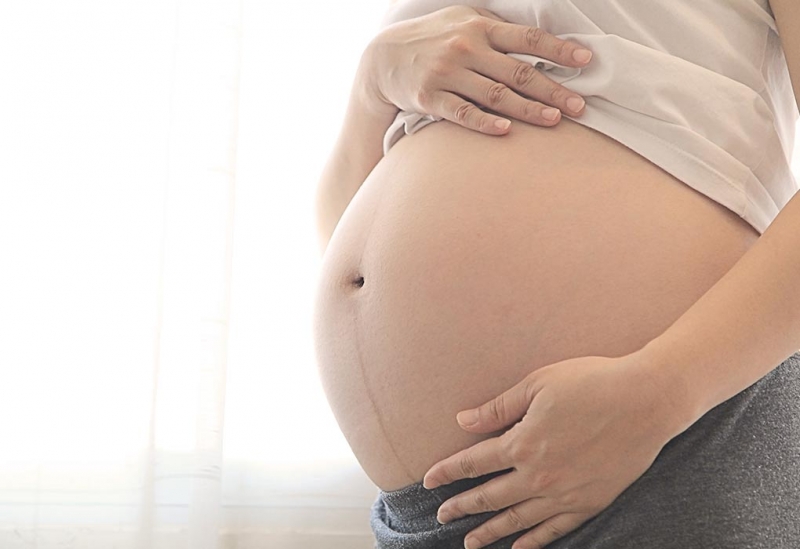
You undeniably have the pregnant look with an abdominal measurement in the range of 28 - 33 centimeters. Your exercise tolerance may be less because the growing uterus makes it harder for your lungs to expand as fully as before pregnancy. This may cause you to feel a little short of breath - so slow down if you need to. Swelling of your legs and feet is common during the last few months of pregnancy, as your uterus constricts the veins leading from the heart to the legs. Gravity pulls the blood down to the legs, but it has a hard time getting back up out of them. It’s important to promote blood flow in your extremities. Your pelvis is expanding - again the effects of relaxin are allowing the ligaments supporting the pubic bones to stretch. This may cause some aching, especially as the weight of baby increases.
The muscle, tendons and ligaments of the pelvic floor support the bladder, uterus, and intestines. Sometimes, urinary incontinence is related to weakness in the pelvic floor anatomy. There is something you can do to prevent this from happening to you - and it’s called Kegels, or pelvic floor strengthening exercises. Kegel exercises involve tightening and releasing the muscles in the pelvic and perineal area.
Experiencing constipation and haemorrhoids while pregnant may become more of a problem as the pressure on the rectal veins continues. Make certain that you are eating lots of fibre - whole grain breads, cereals, and fruits and vegetables. Increasing your fluids will help tremendously to keep the stool moister and easier to pass. Regular exercise will help to keep your bowels moving at a rate closer to pre-pregnancy. Schedule a 20-minute walk in the morning, at lunch or in the evening.
How baby is growing: Bones begin to harden in the process called ossification during this month. The eyelids are no longer fused together, and they can open and close. The hair, including eyelashes, is becoming thicker and darker. Growth is rapid as the foetus gains more fat - the weight is now about 1.4 kilos and the length is 38 to 40 cms.
Reference: Women's Health Connecticut, Inc. Physicians for Women's Health, LLC.